
Future-Proofing History: How to Create a Sustainable Heritage Home in the Cotswolds
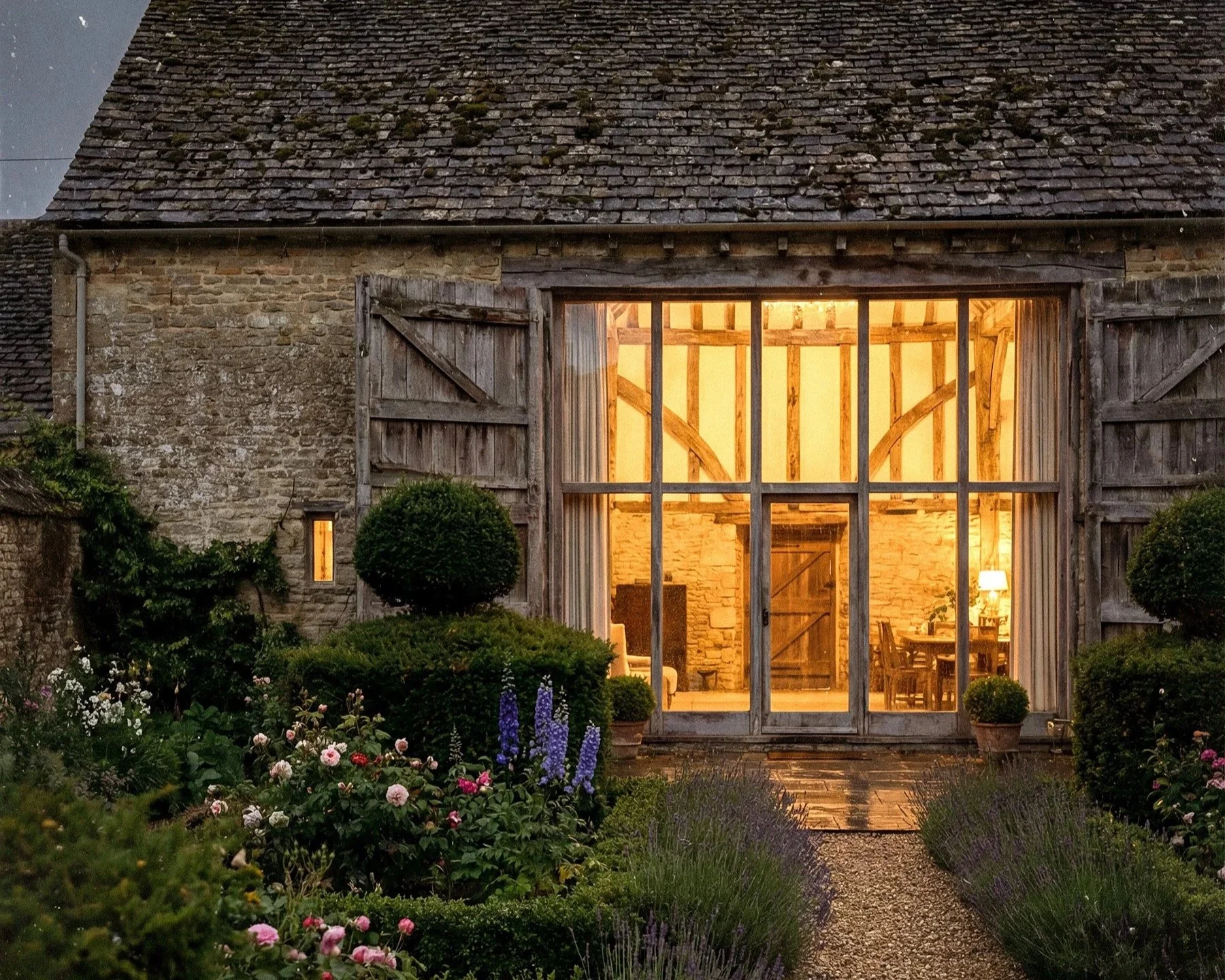
Many property owners think you must choose between a charming Cotswold cottage and an energy-efficient home. Living in a listed manor house or cottage often means contending with draughty windows, damp, and expensive oil heating. As Cotswold architects, we know heritage and sustainability can align. Preserving a building is sustainable if its fabric is respected.
1. The Big Question: Can You Put a Heat Pump in a Grade II Listed Building?
Owners of historic homes increasingly want to replace oil tanks as society shifts from fossil fuels.
The short answer: Yes. The longer answer: It requires sensitive planning, an understanding of heating demand and energy usage, insulation, and airtightness.
The Planning Hurdle
Local authorities and conservation officers now support renewables if they don’t harm the building’s character.
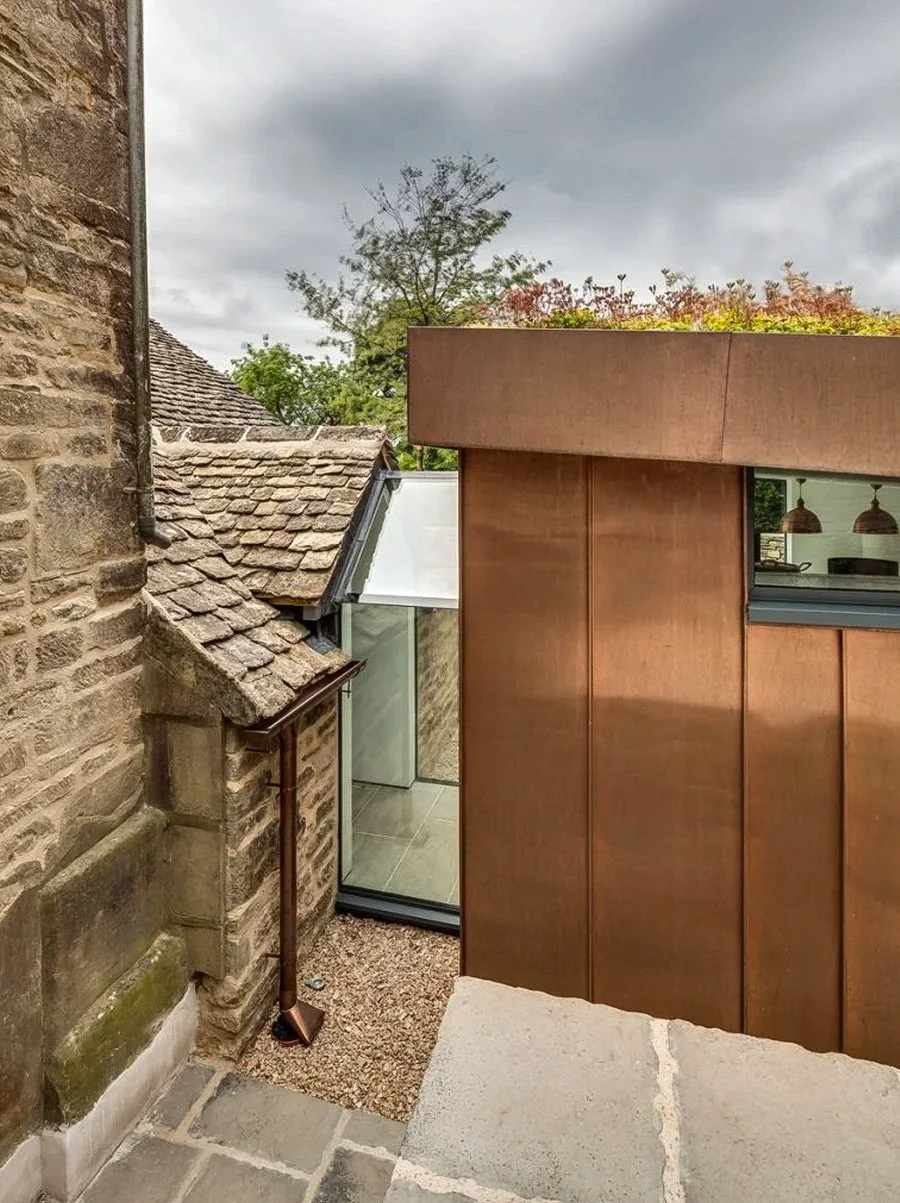
Visual Impact: An Air Source Heat Pump (ASHP), which is an outdoor unit that extracts heat from the air to warm your home, is unlikely to be granted consent if located in a visually prominent location. However, when hidden from view within a discreet, site-sensitive enclosure, it is more likely to be acceptable.
Heat pumps work at lower temperatures than gas or oil boilers. If your home leaks heat, the pump will work harder, increasing running costs. Ensuring a well-insulated environment is therefore essential, but this is easier said than done. In the absence of a policy allowing the installation of new double glazing in listed and heritage buildings, consideration should be given to secondary glazing. Insulation (wall, floor, and roof) is also a primary consideration, but adding insulation to historic fabric can reduce room sizes significantly and affect historic detailing. Thus, it is important to plan before you leap.
The Verdict: A heat pump is a viable option for listed buildings, but it must be part of a holistic heating strategy, not a simple plug-and-play swap.
2. Breathability 101: Why You Should Avoid Using Cement on Cotswold Stone
It is essential to remember: old houses need to breathe.
Modern homes have cavity walls and damp-proof courses and are designed to be sealed. A traditional Cotswold stone house is different; its stone absorbs and evaporates moisture.
The Cement Trap
In the 1970s and 80s, it became popular to point stone walls with cement or apply waterproof renders. This proved disastrous for heritage buildings.
Cement is impermeable and traps moisture in stone.
Trapped water either damages stone (spalling) or it tracks into the building, causing indoor damp and timber rot.
The Solution: Lime and Natural Insulation
We exclusively specify lime plasters and mortars for our restoration projects. Lime is vapour-permeable, meaning it allows water vapour to pass through, so the building can ‘exhale’ moisture rather than trapping it.
When insulating these walls, we aim to avoid standard foam-based boards, which can trap moisture. Instead, we use breathable materials like lime plaster, wood fibre, cork, or sheep’s wool to retain heat and manage moisture for a healthy home.
3. The "Passive House" Barn Conversion
If you want to push the boundaries of sustainability, agricultural conversions offer some of the most exciting opportunities.
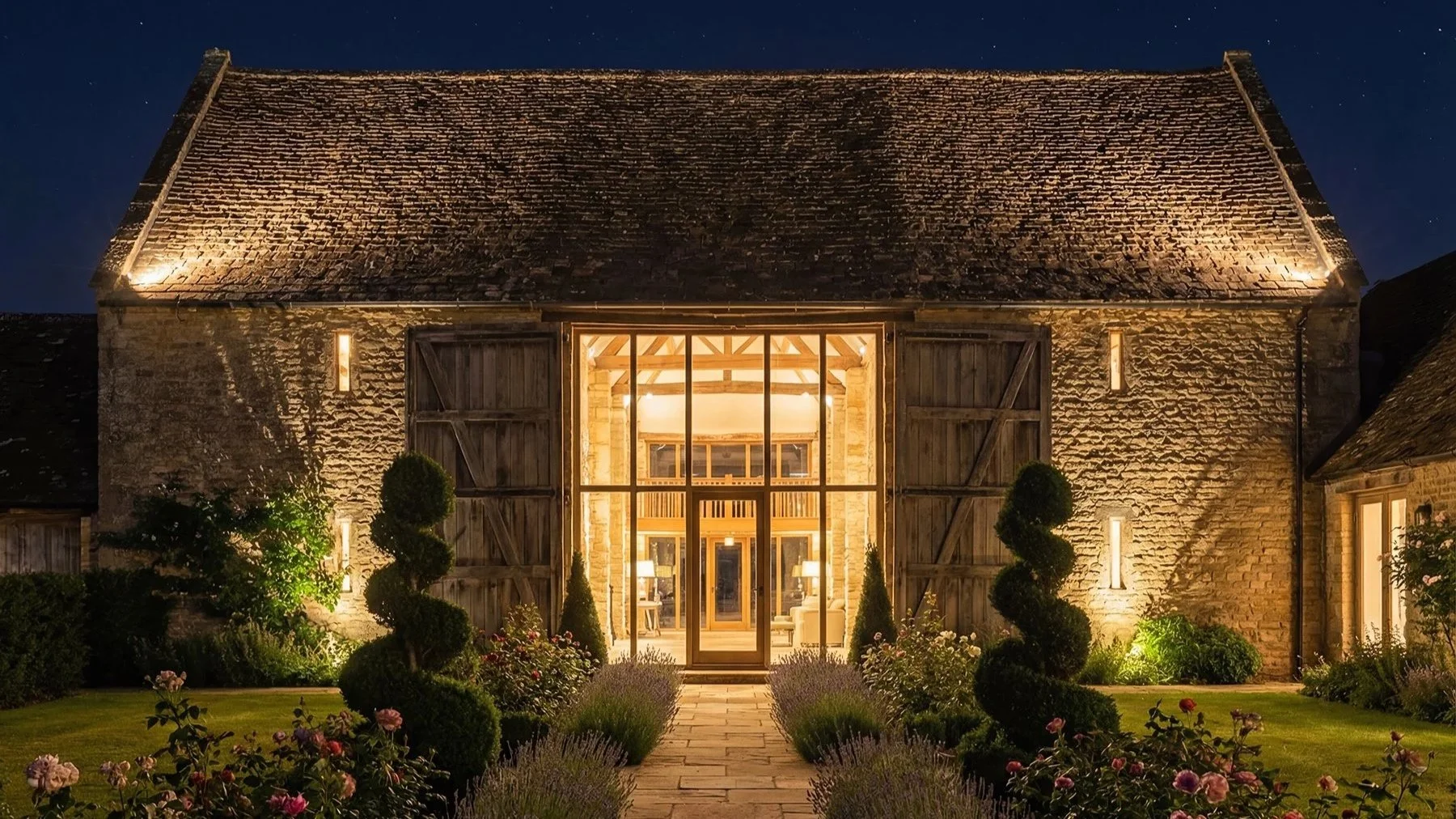
While a listed manor or cottage has many internal restrictions, a stone barn offers greater opportunities and allows us to aim for a higher energy benchmark.
The Best of Both Worlds
Rustic style, oak trusses, and stone walls can be paired with cutting-edge performance.
Often, an insulated timber frame is constructed inside the stone barn, preserving its exterior while creating a sealed, warm interior. 'Super-insulation' refers to installing very high levels of insulation to achieve maximum energy efficiency. 'Hermetically sealed' means air cannot move freely in or out, reducing heat loss.
MVHR (Mechanical Ventilation with Heat Recovery): This system continuously filters fresh air into your home while recovering heat from the outgoing stale air. You enjoy year-round fresh air without opening windows in January.
Solar Integration: Barn roofs are often large and unshaded, making them ideal for integrated solar arrays, groups of solar panels connected together to generate electricity, or slate-style solar tiles, which look like traditional roof tiles but generate solar power and blend into the landscape.
A Worthwhile Investment
A sustainable barn conversion means reduced environmental impact, greater comfort, consistent temperatures, no draughts, and quiet.
As you reflect on these approaches, are you ready to retrofit your historic home for the future? Here’s how you can succeed.
Transforming a Cotswold property into a more sustainable home takes careful engineering, planning, and sensitivity. You can have character and comfort.
Are you looking to improve the efficiency of your period property? Contact our team today to discuss a feasibility study for your Cotswold home.